
Over the weekend in New Jersey, two referees were assaulted by parents following a high school game, and both ended up in the hospital.
The bottom line: don't ever make it personal with the officials. They're doing their best. If there's a systemic problem, it's not their fault (hi, Stewie!). You've really got to love the game to be an official, because you're not noticed when you are doing everything right, and you catch an awful lot of flak when you're doing anything wrong. We've had well documented problems with the officiating in our league and there are a handful of guys we cringe to see suiting up for an RPI game - but be very clear. We have never and will never advocate outright abuse, especially confrontational abuse.
It's just a game. Don't ever forget that. And there's a human being - imperfect, just like you - wearing those stripes.
We asked Dave Aiello, friend of WaP and friend of RPI hockey, who is an official in New Jersey himself, to comment. Here is what he said.
---
Some of you may know me as an RPI alumnus who graduated in 1989. I’ve come back and played in several men’s hockey alumni games, including this season, and I have a tendency to be very supportive of Rensselaer on social media.
I'm also an ice hockey official, and really got started on a path toward high-level officiating at Mike Addesa’s suggestion when I was a sophomore at RPI. Since then, I’ve officiated hundreds of hockey games at all levels below Division I, both as a referee and a linesman.
Dave Brown, an official I’ve known for 30 years, was assaulted by spectators at a High School varsity hockey game on Sunday, February 7 in Howell, New Jersey. Two men, who are reportedly fathers of student-athletes who played in the game, took their protest directly into the officials’ locker room afterward. These spectators repeatedly struck Dave Brown and his partner, causing both officials to leave the arena in ambulances. Thankfully, neither Dave nor his partner were seriously hurt.
I’m telling you this because Dave Brown is also an ECAC Division I linesman who has worked many RPI games. Whether you recognize him by name or not, you’ve seen him work. He is one of the best American hockey officials at any level. He's a good man who you would like, if you knew him the way I do.
I know from watching RPI games and reading what reporters and fans say on-line, that many of you dislike several of the officials that the ECAC Hockey League chooses for its staff. You may not know Dave Brown in the same way that you think you know the referees who make penalty calls. All of the officials on the ECAC staff are great officials who do the best job they can every night that they go on the ice.
I hear the referees and linesmen being second-guessed on almost every tough play that results in a whistle. Perhaps that goes with the territory. But when a decisive call goes against RPI, there is noticeable use of abusive language by fans in the stands, whether the officials made the correct call or not.
At Houston Field House, no official will get anything other than verbally abused from a distance, because it’s almost impossible to get near them. The Field House staff is one of the best in college hockey. But when officials go to almost any other rink-- not just in Division I but at every level of hockey down to Frear Park and Knickerbacker Arena-- the men and women who officiate are much easier to get close to and, amazingly, to physically attack.
I didn’t take this issue as seriously as I do now until a great official that I know personally was assaulted. My wife and kids know Dave, and what happened to him makes them scared about what might happen to me when I go to officiate my next game. It will take a long time for our fears to go away, regardless of what happens in the future.
So when the whistle blows and the thought crosses your mind-- that official is an idiot-- or worse, stop yourself. Remember what just happened to one of the best officials in the ECAC. Control your emotions, the way all players, coaches, and officials must control theirs.
How you act as a spectator at a Division I hockey game influences what is considered acceptable behavior at lower levels of hockey.
Abuse of officials has no place in our game, at RPI or at any other level.
Showing posts with label favorite referees. Show all posts
Showing posts with label favorite referees. Show all posts
Thursday, February 11, 2016

Friday, November 21, 2014
BOHICA
We got two up close and personal examples of Rule 83.5 this past weekend in Troy. One was an exercise in how to apply it. The other was an exercise in how to royally screw things up in ways only the average ECAC referee can.
This is known around these parts as the "Second Union Rule" or the "National Union Rule," as it was adopted following the Union-Michigan State game in the 2012 national tournament where a goal for the Spartans was waved off because Union's Josh Jooris, apparently intentionally according to the NCAA, lifted the net off its moorings just before the puck went in (the "First Union Rule" or the "ECAC Union Rule" provides for all 12 ECAC teams making the post-season tournament).
The rule was redefined as such in the summer of 2012:
First, there's a defined difference between "may award a goal" and "shall award a goal." The referee is given leeway to award a goal but is not required to when this happens with the goaltender in the net. If it's an empty net, he's required.
This is pretty standard, it allows the referees to use judgment when it pertains to the other elements that we're about to discuss.
In order for the goal to be awarded, three things have to be true. First, the goal has to have been dislodged by the actions of a defending player. This would include a defending player pushing an attacking player into the net - the reverse would be cause for disallowing a goal. Second, the puck must have been already shot, or the shooting player must already be in position to shoot, when the net is dislodged. Third, the puck must be determined to have crossed the line where it would have counted had the net been in the proper position.
Let's examine this first in the Princeton game, where a Princeton goal was disallowed.
With RPI leading 1-0, Princeton's Ryan Siiro took a shot toward the RPI cage from the top of the right faceoff circle that was saved by Jason Kasdorf, the rebound falling just to his right. Princeton's Ben Foster worked it free and came around behind the net to the left side.
Foster beat out Jimmy DeVito to grab the rebound, but Craig Bokenfohr and Phil Hampton skated into the area to try and help out - Bokenfohr into the mix with Foster and DeVito, Hampton into the crease. Princeton freshman Eric Robinson arrived late to the party and ultimately checked Hampton into the cage, knocking it loose.
At this point, Foster had the puck to the left of the cage. He passed it to Siiro, who moved into the slot, and Siiro one-timed it into the cage, which was off both of its moorings at that point.

This goal was rightfully disallowed because the circumstances met only one of the three criteria for it to be upheld. Siiro's shot did go where the net would have been, but it was the actions of an attacking player - Robinson checking Hampton - that dislodged the net, and the shot was not imminent when the net was dislodged - Foster had the puck behind the cage and passed it in front only after the net came loose.
Referee CJ Hanafin got this one right from start to finish. He did the right thing by awarding a goal on the ice, then reviewing the play. Under Rule 83.5, this is not a goal, so he disallowed it. For anyone who might still be on the fence, Princeton head coach Ron Fogarty agreed after the game after reviewing video that the goal should not have been awarded. (We like Hanafin a lot because he's an Engineer. Some of us here were crestfallen when we heard he'd become an ECAC referee, but he seems to be raising the bar. He's done well so far and he's been fair.)
Compare this with the disallowed RPI goal the next night against Quinnipiac.
On the power play and with RPI down 2-1, Mike Prapavessis digs the puck out of the corner to the left of the net. He brings it up and around through the faceoff circle and the slot, waiting for his opportunity to catch QU goaltender Michael Gartieg off balance. He gets it when defenseman Connor Clifton, also trying to defend against Prapavessis, falls to a knee and into Gartieg. Prapavessis takes his shot and rings it off the post, the rebound coming straight back out.
Meanwhile, once Clifton and Gartieg collide, QU forward Matthew Peca, standing at the top of the crease, makes a bee-line for the net, sliding into the right-side post to dislodge the net shortly after Prapavessis' shot rebounded off the post. Drew Melanson, now standing over Clifton, does not move with the puck coming directly back to him, and simply puts the puck into the open but dislodged cage.

The goal was awarded on the ice, and it met all three requirements. First, the cage was dislodged by the actions of Peca, who skated straight into the cage unaided. Second, while the shot by Melanson did not come before the cage was dislodged, the rebound from Prapavessis' shot (which happened and hit the post before the dislodging) was coming straight to him already and he did not have to move to take the shot, which occurred a split-second after the net was dislodged. Third, the puck clearly enters the net in a way that it would have been in had the goal been in the proper place.
And despite all of this, the tying goal was waved off. In a search for justification, there are some very, very thin arguments that can be made. All four were posited by our researchers in an attempt to find something that would rationalize the goal being waved off.
1. Melanson is near Clifton just before the latter takes out his own netminder, but he doesn't appear to do anything that would cause Clifton to go down. He does push through Clifton, who is impeding his progress forward, in the bottom of the slot with his stick on the ice. If he'd shoved Clifton into Gartieg, that could be goaltender interference (which was never suggested anyway), but it doesn't seem to be there.
2. While Peca is moving to the net, Melanson's stick is in his vicinity, but it's tough to make even a cursory argument that Melanson did anything to put Peca into the net. It's possible, even likely that Peca was only trying to get himself in a position to defend Prapavessis' initial shot, but he's honestly lucky that he wasn't called for delay of game.
3. One could try to make the argument that Melanson wasn't yet preparing to take his shot at the moment the puck was dislodged, but the shot, based on the trajectory and speed of the rebound and the fact that Clifton and Gartieg were taken out of the play, was clearly imminent at the time the net was dislodged by any reasonable definition of the word.
4. The last question is whether the whistle had blown, or whether there was "intent to blow." That's rendered fairly irrelevant by the fact that the referee behind the net never came close to blowing the play dead (he had his arms at his sides the whole time), and in fact signaled a goal on the ice.
Ultimately, this is exactly the type of situation that the Second Union Rule was intended to fix, and the referees blew it. Compounding the error, it was called a goal on the ice, and then waved off without clear evidence to support a reversal.
By the way, this was not the first time last weekend that Quinnipiac got away with one on a bad call by the referees that directly impacted the scoreline. The previous night in Schenectady, the Bobcats notched the game winner on a play in which the goal-scorer was offsides.

 No coach is going to get overly upset over calls that are blown this badly, because most teams still have other opportunities to rectify the problem themselves. Bad calls are part of the game and referees are human, but you'd think they'd at least get the call right with the opportunity to review the play. It's true that the Engineers had other chances before and after this call to get a goal and they didn't. This goal being disallowed wasn't the reason they lost on Saturday. Who knows if QU then goes down and scores off the ensuing faceoff or something. But there's no team that wouldn't prefer to be in a 2-2 situation than down 2-1, and the missed call changes things for the worse for the team being dealt a raw deal. Union in particular had less than a minute to make up for the bad call that put them behind.
So now the league has a team in first place, half of whose wins were assisted by the men in stripes. Are we happy?
This is known around these parts as the "Second Union Rule" or the "National Union Rule," as it was adopted following the Union-Michigan State game in the 2012 national tournament where a goal for the Spartans was waved off because Union's Josh Jooris, apparently intentionally according to the NCAA, lifted the net off its moorings just before the puck went in (the "First Union Rule" or the "ECAC Union Rule" provides for all 12 ECAC teams making the post-season tournament).
The rule was redefined as such in the summer of 2012:
83.5 Goal Cage Dislodged - In the event that the goal post is displaced, either deliberately or accidentally, by a defending player, prior to the puck crossing the goal line between the normal position of the goalposts, the Referee may award a goal.
In order to award a goal in this situation, the goal post must have been displaced by the actions of a defending player, the puck must have been shot (or the player must be in position to shoot) at the goal prior to the goal post being displaced, and it must be determined that the puck would have entered the net between the normal position of the goal posts.
When the goal post has been displaced deliberately by the defending team when their goalkeeper has been removed for an extra attacker thereby preventing an impending goal by the attacking team, the Referee shall award a goal to the attacking team.
The goal frame is considered to be displaced if either or both goal pegs are no longer in their respective holes in the ice, or the net has come completely off one or both pegs, prior to or as the puck enters the goal. This rule also applies to other types of net anchoring systems.So there are a few elements to examine here.
First, there's a defined difference between "may award a goal" and "shall award a goal." The referee is given leeway to award a goal but is not required to when this happens with the goaltender in the net. If it's an empty net, he's required.
This is pretty standard, it allows the referees to use judgment when it pertains to the other elements that we're about to discuss.
In order for the goal to be awarded, three things have to be true. First, the goal has to have been dislodged by the actions of a defending player. This would include a defending player pushing an attacking player into the net - the reverse would be cause for disallowing a goal. Second, the puck must have been already shot, or the shooting player must already be in position to shoot, when the net is dislodged. Third, the puck must be determined to have crossed the line where it would have counted had the net been in the proper position.
Let's examine this first in the Princeton game, where a Princeton goal was disallowed.
With RPI leading 1-0, Princeton's Ryan Siiro took a shot toward the RPI cage from the top of the right faceoff circle that was saved by Jason Kasdorf, the rebound falling just to his right. Princeton's Ben Foster worked it free and came around behind the net to the left side.
Foster beat out Jimmy DeVito to grab the rebound, but Craig Bokenfohr and Phil Hampton skated into the area to try and help out - Bokenfohr into the mix with Foster and DeVito, Hampton into the crease. Princeton freshman Eric Robinson arrived late to the party and ultimately checked Hampton into the cage, knocking it loose.
At this point, Foster had the puck to the left of the cage. He passed it to Siiro, who moved into the slot, and Siiro one-timed it into the cage, which was off both of its moorings at that point.
This goal was rightfully disallowed because the circumstances met only one of the three criteria for it to be upheld. Siiro's shot did go where the net would have been, but it was the actions of an attacking player - Robinson checking Hampton - that dislodged the net, and the shot was not imminent when the net was dislodged - Foster had the puck behind the cage and passed it in front only after the net came loose.
Referee CJ Hanafin got this one right from start to finish. He did the right thing by awarding a goal on the ice, then reviewing the play. Under Rule 83.5, this is not a goal, so he disallowed it. For anyone who might still be on the fence, Princeton head coach Ron Fogarty agreed after the game after reviewing video that the goal should not have been awarded. (We like Hanafin a lot because he's an Engineer. Some of us here were crestfallen when we heard he'd become an ECAC referee, but he seems to be raising the bar. He's done well so far and he's been fair.)
Compare this with the disallowed RPI goal the next night against Quinnipiac.
On the power play and with RPI down 2-1, Mike Prapavessis digs the puck out of the corner to the left of the net. He brings it up and around through the faceoff circle and the slot, waiting for his opportunity to catch QU goaltender Michael Gartieg off balance. He gets it when defenseman Connor Clifton, also trying to defend against Prapavessis, falls to a knee and into Gartieg. Prapavessis takes his shot and rings it off the post, the rebound coming straight back out.
Meanwhile, once Clifton and Gartieg collide, QU forward Matthew Peca, standing at the top of the crease, makes a bee-line for the net, sliding into the right-side post to dislodge the net shortly after Prapavessis' shot rebounded off the post. Drew Melanson, now standing over Clifton, does not move with the puck coming directly back to him, and simply puts the puck into the open but dislodged cage.
The goal was awarded on the ice, and it met all three requirements. First, the cage was dislodged by the actions of Peca, who skated straight into the cage unaided. Second, while the shot by Melanson did not come before the cage was dislodged, the rebound from Prapavessis' shot (which happened and hit the post before the dislodging) was coming straight to him already and he did not have to move to take the shot, which occurred a split-second after the net was dislodged. Third, the puck clearly enters the net in a way that it would have been in had the goal been in the proper place.
And despite all of this, the tying goal was waved off. In a search for justification, there are some very, very thin arguments that can be made. All four were posited by our researchers in an attempt to find something that would rationalize the goal being waved off.
1. Melanson is near Clifton just before the latter takes out his own netminder, but he doesn't appear to do anything that would cause Clifton to go down. He does push through Clifton, who is impeding his progress forward, in the bottom of the slot with his stick on the ice. If he'd shoved Clifton into Gartieg, that could be goaltender interference (which was never suggested anyway), but it doesn't seem to be there.
2. While Peca is moving to the net, Melanson's stick is in his vicinity, but it's tough to make even a cursory argument that Melanson did anything to put Peca into the net. It's possible, even likely that Peca was only trying to get himself in a position to defend Prapavessis' initial shot, but he's honestly lucky that he wasn't called for delay of game.
3. One could try to make the argument that Melanson wasn't yet preparing to take his shot at the moment the puck was dislodged, but the shot, based on the trajectory and speed of the rebound and the fact that Clifton and Gartieg were taken out of the play, was clearly imminent at the time the net was dislodged by any reasonable definition of the word.
4. The last question is whether the whistle had blown, or whether there was "intent to blow." That's rendered fairly irrelevant by the fact that the referee behind the net never came close to blowing the play dead (he had his arms at his sides the whole time), and in fact signaled a goal on the ice.
Ultimately, this is exactly the type of situation that the Second Union Rule was intended to fix, and the referees blew it. Compounding the error, it was called a goal on the ice, and then waved off without clear evidence to support a reversal.
By the way, this was not the first time last weekend that Quinnipiac got away with one on a bad call by the referees that directly impacted the scoreline. The previous night in Schenectady, the Bobcats notched the game winner on a play in which the goal-scorer was offsides.

It's not possible to tell with 100% surety from this camera angle because of people standing on the Union bench, but unless the 5'7" Travis St. Denis (bottom of the screen) has abnormally sized legs, he's totally offside right before he takes a pass he ends up putting in the net for the winning goal.

So now the league has a team in first place, half of whose wins were assisted by the men in stripes. Are we happy?
Wednesday, January 30, 2013
It Never Gets Old
OK, let's get this out of the way, since everyone's talking about it.
The WaP Screw made its third appearance in as many seasons this past weekend - frequently enough that it now apparently has a name. It's the second time it has popped up in a game against Union, which sucks primarily because losing against Union is annoying.
In fact, this isn't the first time we've lost to Union in the last several years on a questionable call. From what I can recall off the top of my head...
January 16, 2002: Doug Christiansen scores on a net that was clearly off its moorings to put Union ahead 5-4, which would prove to be the final score of the game. This goal would have been legitimate today, but probably shouldn't have counted back then. Referee: Tim Kotyra.
February 7, 2009: Kelly Zajac scores an overtime winner after a Union player shoves a defender into freshman netminder Allen York, putting him on the ice as the puck goes in top shelf. Referee: Bryan Hicks.
November 12, 2010: C.J. Lee gets called for a phantom goaltender interference with 10 seconds left to nullify what would have been a game-tying goal by Nick Bailen. Seth Appert is suspended by the league for the mere act of showing the video replay of the call without commentary. Referee: Bryan Hicks. (As an aside, this also happened in a game against Sacred Heart this season - Lee called for interference that no one but the referee could see to disallow a goal, though RPI was cruising by that point so it was fairly inconsequential. Referee: Tim Kotyra.)
January 26, 2013: Nick Bailen gets called for interference after standing up the man with the puck at the blueline with 1:23 left in a tied game, Union scores on the ensuing power play. Referee: Tim Kotyra.
Well now... pretty sure you know who our favorite referees are.
First off, this isn't a knock on Union, not in the slightest. You get your opportunities, you take them and you walk away. Personally, I prefer to feel like we won fair and square to having to sneak out with a win served up for you by a bonehead call, but a win is a win and you can't fault Union for taking the win.
Bonehead calls can go both ways. I can recall feeling like we stole one in 2007 when Tyler Helfrich scored his first collegiate goal off a puck batted in with a high stick against Sacred Heart in overtime for a 1-0 victory. And of course, perhaps karma is just battering us over the head repeatedly for winning a national championship on a highly questionable goal in 1985 (and if it is... enough already, karma, I think we're square by now.)
And believe me, it doesn't take a loss to recognize awful officiating. RPI beat Boston University 4-1 two seasons ago in a game that was dreadfully officiated (hello, Bryan Hicks!). Heck, there was plenty of grumbling about the officiating this season after the second Mercyhurst game (Hicks again), and the Colgate game two weeks ago (yup), both wins.
Personally, I prefer to know in tight situations whether a win was legit. The night after Lee's phantom interference call, RPI tied Union with a Marty O'Grady goal at 19:59.8 of the third period, and won on a power play goal in overtime off a cross-checking call in the Union zone. I recall examining both the goal and the penalty with a high level of scrutiny - ultimately, I was satisfied (the goal beat the horn, and the penalty was pretty dangerous), but not by much.
These guys don't have some kind of weird vendetta against RPI or something. The Engineers are 13-25-4 all time in games where Tim Kotyra is on the ice, a .357 winning percentage against a .454 total winning percentage without him during that span (since 1999-2000). That's not outrageous. In fact, RPI has a winning record with Bryan Hicks on the ice (9-7-1 since 2008-09), which is better than their overall winning percentage during the same time period.
That's not what this is about. It's about making the right call at crunch time, and these guys just seem to keep turning up like bad pennies. We're not here making complaints about Bob St. Lawrence, Jean-Yves Roy, or Andy O'Brien, and we see these guys plenty, too. Makes you wonder.
Both teams have to play with the referees they are given, but the bottom line when certain zebras are out there is that when you play in close games - and RPI/Union is frequently close, and one or the other has done 11 of them over the years - you are leaving yourself open to having to deal with the consequences of a bad call.
Paul Stewart likes to respond to criticism of referees with something along the lines of "tryouts in August, come lace them up!" In other words, if you personally cannot do a better job, keep your mouth shut.
Sorry, Stewie. This isn't our problem. It's yours, whether you want to admit that it exists or not.
The WaP Screw made its third appearance in as many seasons this past weekend - frequently enough that it now apparently has a name. It's the second time it has popped up in a game against Union, which sucks primarily because losing against Union is annoying.
In fact, this isn't the first time we've lost to Union in the last several years on a questionable call. From what I can recall off the top of my head...
January 16, 2002: Doug Christiansen scores on a net that was clearly off its moorings to put Union ahead 5-4, which would prove to be the final score of the game. This goal would have been legitimate today, but probably shouldn't have counted back then. Referee: Tim Kotyra.
February 7, 2009: Kelly Zajac scores an overtime winner after a Union player shoves a defender into freshman netminder Allen York, putting him on the ice as the puck goes in top shelf. Referee: Bryan Hicks.
November 12, 2010: C.J. Lee gets called for a phantom goaltender interference with 10 seconds left to nullify what would have been a game-tying goal by Nick Bailen. Seth Appert is suspended by the league for the mere act of showing the video replay of the call without commentary. Referee: Bryan Hicks. (As an aside, this also happened in a game against Sacred Heart this season - Lee called for interference that no one but the referee could see to disallow a goal, though RPI was cruising by that point so it was fairly inconsequential. Referee: Tim Kotyra.)
January 26, 2013: Nick Bailen gets called for interference after standing up the man with the puck at the blueline with 1:23 left in a tied game, Union scores on the ensuing power play. Referee: Tim Kotyra.
Well now... pretty sure you know who our favorite referees are.
First off, this isn't a knock on Union, not in the slightest. You get your opportunities, you take them and you walk away. Personally, I prefer to feel like we won fair and square to having to sneak out with a win served up for you by a bonehead call, but a win is a win and you can't fault Union for taking the win.
Bonehead calls can go both ways. I can recall feeling like we stole one in 2007 when Tyler Helfrich scored his first collegiate goal off a puck batted in with a high stick against Sacred Heart in overtime for a 1-0 victory. And of course, perhaps karma is just battering us over the head repeatedly for winning a national championship on a highly questionable goal in 1985 (and if it is... enough already, karma, I think we're square by now.)
And believe me, it doesn't take a loss to recognize awful officiating. RPI beat Boston University 4-1 two seasons ago in a game that was dreadfully officiated (hello, Bryan Hicks!). Heck, there was plenty of grumbling about the officiating this season after the second Mercyhurst game (Hicks again), and the Colgate game two weeks ago (yup), both wins.
Personally, I prefer to know in tight situations whether a win was legit. The night after Lee's phantom interference call, RPI tied Union with a Marty O'Grady goal at 19:59.8 of the third period, and won on a power play goal in overtime off a cross-checking call in the Union zone. I recall examining both the goal and the penalty with a high level of scrutiny - ultimately, I was satisfied (the goal beat the horn, and the penalty was pretty dangerous), but not by much.
These guys don't have some kind of weird vendetta against RPI or something. The Engineers are 13-25-4 all time in games where Tim Kotyra is on the ice, a .357 winning percentage against a .454 total winning percentage without him during that span (since 1999-2000). That's not outrageous. In fact, RPI has a winning record with Bryan Hicks on the ice (9-7-1 since 2008-09), which is better than their overall winning percentage during the same time period.
That's not what this is about. It's about making the right call at crunch time, and these guys just seem to keep turning up like bad pennies. We're not here making complaints about Bob St. Lawrence, Jean-Yves Roy, or Andy O'Brien, and we see these guys plenty, too. Makes you wonder.
Both teams have to play with the referees they are given, but the bottom line when certain zebras are out there is that when you play in close games - and RPI/Union is frequently close, and one or the other has done 11 of them over the years - you are leaving yourself open to having to deal with the consequences of a bad call.
Paul Stewart likes to respond to criticism of referees with something along the lines of "tryouts in August, come lace them up!" In other words, if you personally cannot do a better job, keep your mouth shut.
Sorry, Stewie. This isn't our problem. It's yours, whether you want to admit that it exists or not.
Monday, February 14, 2011
EXCLUSIVE: Truth to Power
If you were at Saturday afternoon's matinee at Houston Field House, chances are good that you walked away from the building disgusted by what you saw take place. No, it wasn't a disgust that the Engineers had lost, per se, as they had the previous night to a last-place team. Instead, it was more likely a disgust with the way the game played out thanks to yet another instance of awful officiating decisions, something that ECAC fans, while certainly now accustomed to, are never quite willing to accept, especially when they cost your team a fair shot at earning some league points.
We are told that some of these things are matters of opinion. If that is true, than officiating itself is nothing more than the official's opinion - but we know that's not true. Cornell, on Saturday, was either intentionally trying to start trouble, or they weren't. They were either diving, or they weren't.
It's always a little easier to swallow awful officiating when your team comes out on top - look no farther than the RPI-BU game this past December. But things are now starting to reach a head. Jason Klump, who writes for College Hockey News, became part of the story when he sought comment from Paul Stewart, the ECAC's Director of Officiating, on Saturday's debacle, which led to the ugly sight of frustrated and angry RPI fans hurling towels and other objects toward the referees after the game, ultimately requiring Houston Field House to provide a police escort. We don't support that kind of reaction, but it is certainly telling. This goes beyond run of the mill bad officiating.
Instead, what transpired in the aftermath, not only in Troy but later that night in Schenectady, has to be read to be believed.
Klump wrote this piece for CHN, which understandably declined to publish it, not only because it is an opinion piece, but because Klump became part of the story due to the events that took place while he was writing it. These are his opinions, which are not endorsed by CHN, and which do not represent their views.
We are not constrained by rigid editorial guidelines. Since the very beginning, Without a Peer has melded news and opinion, hard facts and editorial. We also wear our bias on our sleeves - we are RPI fans. What you see is what you get, nothing more, nothing less.
After all, it's all just a matter of opinion - just like the officiating, apparently.
We offer Klump's account here as a look at the attitudes of the ECAC towards its officiating problems - and what happens when members of the media dare to speak truth to power.
You can contact Mr. Klump at jmklump@gmail.com.
---
In the final minute of Cornell's 4-0 loss to Union Friday night, the Big Red's Dan Nicholls decided it was time to pick a fight with Andrew Buote of the Dutchmen, who stood his ground and did not retaliate as Nicholls ripped off his helmet, shoulder pads, and sweater.
We are told that some of these things are matters of opinion. If that is true, than officiating itself is nothing more than the official's opinion - but we know that's not true. Cornell, on Saturday, was either intentionally trying to start trouble, or they weren't. They were either diving, or they weren't.
It's always a little easier to swallow awful officiating when your team comes out on top - look no farther than the RPI-BU game this past December. But things are now starting to reach a head. Jason Klump, who writes for College Hockey News, became part of the story when he sought comment from Paul Stewart, the ECAC's Director of Officiating, on Saturday's debacle, which led to the ugly sight of frustrated and angry RPI fans hurling towels and other objects toward the referees after the game, ultimately requiring Houston Field House to provide a police escort. We don't support that kind of reaction, but it is certainly telling. This goes beyond run of the mill bad officiating.
Instead, what transpired in the aftermath, not only in Troy but later that night in Schenectady, has to be read to be believed.
Klump wrote this piece for CHN, which understandably declined to publish it, not only because it is an opinion piece, but because Klump became part of the story due to the events that took place while he was writing it. These are his opinions, which are not endorsed by CHN, and which do not represent their views.
We are not constrained by rigid editorial guidelines. Since the very beginning, Without a Peer has melded news and opinion, hard facts and editorial. We also wear our bias on our sleeves - we are RPI fans. What you see is what you get, nothing more, nothing less.
After all, it's all just a matter of opinion - just like the officiating, apparently.
We offer Klump's account here as a look at the attitudes of the ECAC towards its officiating problems - and what happens when members of the media dare to speak truth to power.
You can contact Mr. Klump at jmklump@gmail.com.
---
In the final minute of Cornell's 4-0 loss to Union Friday night, the Big Red's Dan Nicholls decided it was time to pick a fight with Andrew Buote of the Dutchmen, who stood his ground and did not retaliate as Nicholls ripped off his helmet, shoulder pads, and sweater.
Cornell coach Mike Schafer did express displeasure with Nicholls' specific decision, but not with the spirit of it.
"I talked to him after the game," Schafer said. "He decided to go after the kid alone. His response was, over the last bunch of games, we've had kids hurt...nothing ever seems to happen. There are no ramifications. I've told our players back in January that we need to start protecting each other. That was the only emotion we showed all night. Hits from behind, high hits, the silent slash to the hands — we've got to protect each other, and do it the right way. That wasn't the right way."
So, on Saturday, Cornell started gooning it up right from the drop, routinely mugging and instigating RPI players after whistles, once crashing into goalie Bryce Merriam at full speed. Not only that, it appeared to many in the press box that they also took more than a few dives throughout the night to lead to several of their eight power plays. Not sure if that is Schafer's idea of "the right way," but that is beside the point.
The point is that there was a perception that referees Peter Feola and Tim Kotyra let Cornell have its way with minimal repercussions while simultaneously allowing them to embellish their way into extra, timely power plays - all the while turning the game altogether into one big revolving penalty box door. The near capacity crowd thought it was so bad, the refs needed security to protect them from towels and other items being thrown as they left the ice.
This is an RPI fanbase that is still steaming from referee Bryan Hicks' now infamous wave-off at Messa Rink of the Engineers' would-be tying goal for phantom goalie interference. Hicks never received any discipline. Further, the ECAC offices refused to issue any comment on the incident, other than they were of course suspending RPI coach Seth Appert one game for violation of secret, unpublished rules (which they also refused to reveal) because he showed video of the play at the post-game press conference. Appert stated at the time that he "[thought] the refs should be worried about it." Apparently, they don't have to be worried. There is an obvious double-standard.
This story actually begins last weekend.
This story actually begins last weekend.
After the games had concluded last Saturday February 5, I emailed ECAC Commissioner Steve Hagwell to ask whether there was a new initiative to hand out more game disqualifications to crack down on rough play in the wake of the pro-style fight earlier this season at the UConn Hockey Classic between Princeton's Michael Sdao and Bowling Green's Max Grover, among other things.
His response via email was as follows:
"An initiative to hand out more game DQs? On what do you base your assertion? If your statement is based on the fact that five (5) disqualification penalties have been assessed in the last two (2) weekends, you are mistaken."
That is in fact the very thing on which I based my inquiry, so I don't think it was quite so far-fetched as he indicated.
He continued to explain, "the fact is that four (4) of those DQs have been assessed for facemasking. The NCAA ice hockey rules committee clarified the penalty for facemasking in the 2010-12 rules book as follows:
'Rule 6, Section 14 (Face Masks), Pages HR-64-65
c. A player shall not grasp and pull or twist an opponent’s facemask.
PENALTY—Disqualification for excessive roughness.'"
So at that point I took his explanation of facemasking being an automatic DQ at face value. That was until Cornell's Rodger Craig was called for a facemasking major Friday night at Union, but received only a game misconduct rather than a DQ. I emailed Hagwell again to see why there was this inconsistency, but received no response as of Saturday evening.
I knew there was going to be reaction to the officiating from the game participants in the post-game at Houston Field House, thus I asked RPI Associate Athletic Director for Communications Kevin Beattie if there was anyone from the league present as I had not seen anyone. He said that both Hagwell and Stewart were there, so I requested to speak to one or both of them.
Before I went to go speak with any players or coaches, Beattie came to me and said Stewart had agreed to speak to me. I was admittedly surprised as I had expected he and Hagwell to decline comment. Beattie led me into an empty room off the officials dressing room where only he, Stewart, and I were present (though this part is all recorded). Since I was about to speak with him about the quality or lack thereof of the officiating in the RPI-Cornell game, I asked Stewart first for clarification on the facemasking issue.
"It's a judgment call based on the officials' evaluation on the ice," he answered, clearly contradicting the Commissioner's previous response. "We've reviewed the call and looked at the tape and we support the call. We don't feel by comparison with regard to some of the other facemasking calls that there was [as much pulling on the mask.] There is a degree of latitude that comes under the term 'judgment' so as much as we want to review the tape, we also have to understand the referee is four feet from it."
Fair enough, but I don't see where the words "judgment" or "latitude" appear in the rule cited by Hagwell, nor do I see how his explanation indicated there was any such discretion. It seems like two inconsistent explanations to explain inconsistent calls.
I then got to the immediate focus of my discussion with Stewart and asked if he had a comment on the officiating of the present game.
"I think it was outstanding," was Stewart's response. "We had the hit from behind [by Cornell's Greg Miller on RPI's John Kennedy late in the 3rd] which was a vicious play and its sad because those types of things can injure players. And it's ironic how sometimes things happen and then they happen again. Interference pick at the blue line by the RPI player going backwards and then vice versa by Cornell."
Stewart was mistaken because both of those identical interference calls first late in the 3rd period and then in overtime to lead to the game-winning goal were against RPI's Bryan Brutlag, part of one of the more controversial sequences in the game. It even got mentioned by Brandon Thomas of the Ithaca Journal in his story.
But since he was choosing to discuss the most obviously non-controversial call and being otherwise evasive of what he likely knew was the basis of my inquiry (which is fine, I like when people make me do my job), I asked him more specifically why it appeared Cornell was allowed to goon it up all night with no repercussions other than a few matching minors.
"Everyone is entitled to their opinion," he began. "And I don't know what...I don't keep track...I don't have a ball or a box of marbles to decide who, you know..."
Realizing it is actually his job to "know what..." is going on, to "keep track..." of it, and to "decide who..." is worthy of officiating in the league, he switched gears mid-sentence.
"...but I would stake that my 38 years in pro hockey and officiating and playing would probably overshadow your experience. Not to belittle your experience, but I watch the game without cheering. I have no provinciality regarding it. I just look at it from the point of view of the ability to enforce the rules fairly and consistently and I felt that these two fellas who have worked Olympic hockey, have worked the Frozen Four..."
"As a linesman," I interjected, to indicate that my experience was enough to know Feola had only called offsides and icing in the 2010 Olympics.
"Regardless," he continued. "Have you ever been to the Olympics yourself?"
"No."
"Well, that answers that. They have experience and they work Frozen Fours and NCAA Championships and ECAC Championships. So I would, if I were a writer with any integrity, I would never question the integrity of an official. That's what you're doing. And I don't appreciate that. OK? End of discussion." He then walked away without shaking my outstretched hand.
"Yeah, I think that's the way they like to play and any time they can try and get our guys in the box, they're gonna do that," said RPI's Chase Polacek, never quick to denigrate his opponent, when asked about Cornell's tactics. "They try to play a rough style and try to be tough, but sometimes when they're diving around out there, it shows how they really aren't that tough."
"I guess if we would fall down and dive more, we would get more calls," echoed RPI coach Seth Appert. "I find it odd that Cornell falls down so much. It was like an aquatic center out there. A lot of diving. Lot of diving. I get frustrated when Jeff Foss gets called for interference when their guy has the puck. I think by definition you can't have an interference call when the player has the puck. Now, was it a cross-check? Maybe. Was it a dive? Probably. Was it interference? No. If a player has the puck, it cannot be interference. It's not why we lost. It's not why we lost."
Schafer of course saw it the other way. "It was a game where I thought the referees did a great job," he said in his opening statement, completely unprovoked. "They called all the calls that needed to be called all night long. It seemed like the officials, and I'd love to see more of this, they called everything. And I think players will start to respond by being more disciplined."
According to some messages I got from some people who have been covering the ECAC far longer than I, Stewart often cops this "how dare you question me" attitude when reporters ask about the officiating. I don't think I had to actually be at the Olympics to realize that the IOC only felt Feola was qualified to act as a linesman at that level and not a referee. The AHL felt the same way, as a matter of fact. I guess the ECAC has lower standards. So, I figured that was that and packed up my stuff for the short trip west along Route 7 for my second game of the day, made possible by a separation of the start times in Troy and Schenectady.
When I arrived at Messa Rink for the Union-Colgate game near the end of the first period, Stewart was in the press box and I was still willing to let by-gones be by-gones, so I approached him quietly behind everyone as he was leaving at the end of the period just to clarify that I was not questioning the referees' "integrity."
"I was never questioning anyone's integrity," I said. "I don't believe that either Feola or Kotyra did anything they believed to be wrong or biased. I suppose what I am questioning is their ability to officiate a good game."
At that point, he immediately decided to raise his voice and draw the attention of everyone else in the press box as he accused me of "giving opinions instead of asking the right questions" and failing to be impartial. That was again after he had run through the irrelevant list of qualifications for Feola and Kotyra all over again, all the while making a scene and drawing the attention of everyone away from the game. He then started to walk away, but turned back unprovoked to shout more insults in my direction and to add some finger-pointing.
Honestly, telling me that a bad referee (and I am not saying either is bad, per se, though they were today) has officiated in the Olympics, Frozen Four, or ECAC Championship makes it even worse.
The kicker was that, as he turned back from heading down the stairs, he shouted that I was "being like Appert" and "using the refs as a crutch for why they lost." I won't comment on that part. Enough others already have.
Unfortunately, the spontaneous and impromptu nature of this one-sided confrontation means it was not recorded. It was, however, witnessed by a number of other media figures. Ken Schott of the Daily Gazette wrote in his blog that he feared it would get physical, though I never felt that way. Union SID Jeff Weinstein said he was not going to wait much longer before getting involved to quell Stewart's rage.
Unbeknownst to me at that time, Stewart had apparently already asked Ken Schott at the beginning of the game, asking him "what official are you going to grill next?"
I would like nothing more than to sit down and review the tape of yesterday afternoon's game with Stewart himself while he attempts to justify the calls made or omitted, but his lack of professionalism and propensity for bullying make that unlikely at this point.
Look, Mr. Stewart, I know what you have accomplished in your life, but the fact is you are bad at your current job. I suppose I could write that about a lot of people, but most of them are too classy for me to have any true desire to do so. Heck, I am bad at a lot of things. I was bad at being a law student, mostly because I have no patience for bad laws. But none of the things I am bad at are my job.
The quality and consistency of officiating in the ECAC has been going downhill ever since you took your current position, and I know I'm not the only one who thinks so. What's more, there is absolutely no transparency or accountability. When Bryan Hicks waved off that goal without cause on November 12, he received no suspension. When that happens in the WCHA, refs get fired. The ECAC demands no less if it wants the integrity of the games to be upheld.
I suppose someone in the media had to be the one to say something publicly about the officiating in the ECAC eventually. And I know I am not the only member of the ECAC media who holds my opinion. It can't be left solely to coaches like Seth Appert, because they face suspension for speaking the truth and showing video to back it up, so they will never go as far as they really want. Someone who does not have to fear repercussions, other than maybe the most famous NHL official ever trying to intimidate you, needs to be the one to start the discussion. Unlike Mr. Stewart, I also welcome those with dissenting opinions, for I enjoy civilized discussion.
Sunday, February 13, 2011

Sunday, December 12, 2010
Boston Terriers Are Not Scary
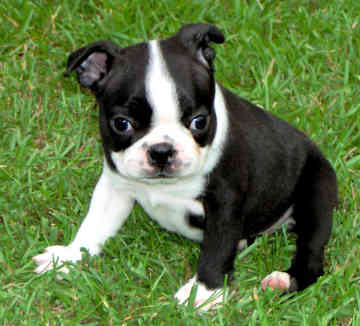 See? Very cute and not scary.
And this is coming from fans of a team called the "Engineers." So of course, it's all in good fun.
As was last night's game. Getting past the awful officiating that marred the whole thing and especially the waning moments (and what else can you really expect from a game officiated by Bryan Hicks at this point?), RPI looks primed. They played as a team against a squad loaded with talent and while BU didn't appear to play their best game, they're nothing to shake a stick at. It was a solid victory for the home team, which is now 7-0-0 inside the friendly confines of Houston Field House.
And don't look now, but if the season ended today, 9 of RPI's 16 games thus far would be against teams playing in the national tournament. It should come as no surprise that the Engineers' schedule to date is rated as the toughest in the ECAC - or that their 9-4-3 record sees them ranked 9th in the nation according to KRACH.
When asked if this was a signature win for the team, Allen York (28 saves, including two on the breakaway) had the right response. "You know, it could be...but at the end of the day it's still a regular season win so I hope not."
Strap in and hold on. This could get exciting.
Wednesday, November 17, 2010
Appert Suspended One Game by the ECAC
Straight from the horse's mouth:
Now, after looking for "ECAC Hockey Policies and Procedures," it was nowhere to be found. We did, however, find the ECAC East's bylaws. The ECAC East is a Division III conference still directly connected to the actual Eastern Collegiate Athletic Conference (ECAC Hockey split from the actual ECAC in 2004). They have a Section 5 called "Conduct and Ethics." It stands to reason that it's probably pretty much the same thing.
Here's the transcript. The first mention happened while Nick Bailen and John Kennedy were being interviewed, with Appert sitting nearby.
Perhaps it was later in the press conference, when Appert sat down at the dais.
Later, Appert talked more about his reaction.
Meanwhile, apparently Nate Leaman is allowed to trash talk Appert in his own press conference from that night while avoiding the obvious.
Then, of course, Leaman not only whines about the press coverage the next night - the press coverage after a victory - he withholds his team from the media. And nothing.
But hey. At least he didn't make the league look bad.
It's time for the ECAC to man up. The video seems to indicate that RPI was deprived of not one but two goals which probably should have counted this weekend. Union should have had the benefit at the end of Saturday's game of having the video to check to make sure the goal should have counted. There. Is. A. Problem. Sticking your head in the sand and putting your crosshairs on those pointing out the problem instead of fixing it is exactly why this league is becoming more and more of a laughingstock in the college hockey world.
If this leads to some kind of positive action by the league on fixing the officiating problems that have plagued the ECAC for years - problems that Paul Stewart was supposedly brought in to bring to heel THREE years ago, then this suspension is worth it. If not, it's just another indication of the downward spiral. Who's the martyr going to be, Mr. Hagwell? Seth Appert or Paul Stewart?
ALBANY, N.Y. -- ECAC Hockey today announced that Rensselaer head coach Seth Appert has been suspended one game as a result of his post-game actions after a game at Union, Friday November 12.OK. Yes, most of us saw this coming.
The League action was taken in accordance with Section VI. (Conduct and Ethics) of ECAC Hockey Policies and Procedures.
Appert will miss Rensselaer’s game Friday, November 22 versus Connecticut.
Now, after looking for "ECAC Hockey Policies and Procedures," it was nowhere to be found. We did, however, find the ECAC East's bylaws. The ECAC East is a Division III conference still directly connected to the actual Eastern Collegiate Athletic Conference (ECAC Hockey split from the actual ECAC in 2004). They have a Section 5 called "Conduct and Ethics." It stands to reason that it's probably pretty much the same thing.
League DisciplineSo basically, don't ever make the league look bad.
The ECAC commissioner is permitted to assess penalties (i.e., suspensions) on coaches and student-athletes for abusive or racial language, physical action with the intent to injure, negative language toward officiating in public forums (i.e., media) or other incidents, which the Commissioner deems as detrimental to the image of the League.
Here's the transcript. The first mention happened while Nick Bailen and John Kennedy were being interviewed, with Appert sitting nearby.
Ken Schott, The Daily Gazette: Nick, we'll start with you on the controversial ending. What did you see?That looks pretty benign to me. Is this suspension based on showing a video of what actually happened, with no comments? Yes, it's obvious he was of the opinion that the wave-off was bogus. But he left it to the media to make that decision for themselves. They saw his reaction, they know how he felt from that alone. Are we going to suspend people for ever disagreeing with the referees? Does the simple showing of a video make the league look bad? If so, the league has to ask itself... WHY? Why does it make us look bad?
Nick Bailen: I just saw a lot of guys in front, and apparently we had goalie interference, but we can't put everything on that it was just... we should have won it earlier in the game and not given up so many (power plays). We had a good chance, we capitalized, it's just unfortunate that the calls didn't go our way at the end, but we can't blame everything on that.
Schott: What did you think of the call? You guys are celebrating for a couple seconds and then you guys come to find out it's waved off.
Seth Appert: You guys take a look and see. They're not going to comment on the call, but here it is if you want to watch it.
(places laptop on dais)
Appert: There's no comments. Refs make good calls, they make bad calls. We can all watch it and see if there's any interference.
(plays video)
Appert: So I don't think they'll have to answer any more questions on that again.
Schott: Are you... do you think you're going to get fined...
Appert: Back to them.
Perhaps it was later in the press conference, when Appert sat down at the dais.
Schott: Seth, are you concerned you might hear from the league about showing the video?Appert was rather standoffish during this exchange. There was a good five seconds of silence after he said the ref should be concerned about it - a comment that could possibly have been the ultimate trigger. But why shouldn't the ref be concerned about blowing a call that cost a team the opportunity to play for one, and possibly two points in overtime?
Appert: Why? Is there a policy that you can't show video?
Schott: I'm just asking.
Appert: I think the ref should be concerned about it.
Sean Martin, Albany Times Union: Did you talk to him? What did he say?
Appert: Apparently, we hit the goaltender.
Martin: With what?
Appert: We hit the goaltender into the post and knocked the post off, or something of that nature. Not sure.
Later, Appert talked more about his reaction.
WNYT Reporter: Coach, I know I haven't covered you or RPI for all that long, but the way you reacted to the call, do you remember a time in your career reacting like that to a certain call?He's right - the Engineers did take too many penalties on Friday, and limiting them on Saturday helped them win, but let's be real. The disallowed goal would have made it 2-2. Did they play a perfect game? No. Could they have gotten the goal earlier? Yes. They didn't. But they did get it before 60:00, which is all that was asked of them. To disregard a terrible call just because they could have scored another goal in the preceding 59:52 is a joke. Yale lost 4-3 on Sunday when they could have won 6-4 if they'd scored 3 more goals earlier in the game, right? Same stupid argument.
Appert: I'm sure I get emotional sometimes. I try not to. I try to be less emotional as I'm getting older and feeling much older. I want to keep the bench calm and we're doing a better job of that in the last year and a half. I think I react emotionally when you know the call is wrong. And it's not why we lost, I want to make that abundantly clear. Full credit to Union, I would appreciate it if everybody would put that in their story. I give full credit to Union, to Nate (Leaman) and his staff for the victory. Absolute full credit. The goal is not why we lost. But...
Ed Weaver, The Record: ...that's why you're not in overtime right now.
Jason Klump, College Hockey News: Why did you lose, then?
Appert: We lost because we were in the box too much.
Meanwhile, apparently Nate Leaman is allowed to trash talk Appert in his own press conference from that night while avoiding the obvious.
Schott: We got to see a video of it, and for us it was tough to tell. We were surprised Seth would actually show us the video of the play.Well, first, that's wrong, although I'm sure Leaman hadn't been around for the Appert press-conference. Second, dodging that question's pretty much proof positive that he knows they got the benefit from a lousy call.
Nate Leaman: Whatever. That wasn't the game. I thought the game was [Allen] York... I thought we had some chances to make it 3-1, and some chances to make it 2-0, and I think York held them in there.
Klump: If that goal hadn't been waved off, would you have been asking why it wasn't?
Leaman: That's not the game. You guys are making that call the game, that's what [Appert] wants, he wants that call to be the game, that's what he wants to sell to his team.
Then, of course, Leaman not only whines about the press coverage the next night - the press coverage after a victory - he withholds his team from the media. And nothing.
But hey. At least he didn't make the league look bad.
It's time for the ECAC to man up. The video seems to indicate that RPI was deprived of not one but two goals which probably should have counted this weekend. Union should have had the benefit at the end of Saturday's game of having the video to check to make sure the goal should have counted. There. Is. A. Problem. Sticking your head in the sand and putting your crosshairs on those pointing out the problem instead of fixing it is exactly why this league is becoming more and more of a laughingstock in the college hockey world.
If this leads to some kind of positive action by the league on fixing the officiating problems that have plagued the ECAC for years - problems that Paul Stewart was supposedly brought in to bring to heel THREE years ago, then this suspension is worth it. If not, it's just another indication of the downward spiral. Who's the martyr going to be, Mr. Hagwell? Seth Appert or Paul Stewart?
Sunday, November 14, 2010
Just Get It Right? Not Quite
This was an emotionally taxing weekend to say the least, for everyone involved in the RPI-Union weekend, coaches, players, and fans alike. That should extend as well to the referees involved and, by extension, the league itself.
These games should have been a marquee event for the ECAC the likes of which haven't been seen in some time. It is one thing for two nationally ranked teams to play each other - that happens every weekend in some other leagues, and occasionally in the ECAC as well. In the ECAC, however, that is practically always confined to a single game. This time, it was an entire weekend, played home-and-home, between a pair of teams who are developing a rivalry that is becoming just as intense as some of the storied rivalries around the oldest league in the nation.
But as is quickly becoming the norm - if it hadn't already been the norm for years - the referees ended up taking center stage, especially on Friday night, and it's a shame.
First, the obvious. The call on Friday night against C.J. Lee was ridiculous, and the video seems to show just how ridiculous it was. The reaction displayed by Seth Appert after the game was abnormal for anyone who's seen him weather a tough loss. He was angry, and the video really did make it a justifiable anger. Naturally, the league has not, and will not, commented on the egregious error.
I want to believe that the referees on Saturday night got the call right because O'Grady scored before the green light came on and they knew it. I fear they may have gotten it right for the wrong reasons. Video shows that Bob St. Lawrence and Eric Ernst got the call right. Marty O'Grady clearly put the puck into the net before the green light came on behind Keith Kincaid. But they should have had the means to double-check that without having to confer with each other and with their linesmen to essentially do a "best guess."
What concerns me the most, however, is the possibility that St. Lawrence and Ernst may have considered the ramifications of disallowing O'Grady's goal. There was already an atmosphere of anger at the Field House even before the game started thanks to the disallowed goal from Friday night. That only ratcheted up in the first period when an apparent goal by Scott Halpern was waved off because the net was off its moorings. Upon video review, the goal doesn't appear to move at all, though the puck did go in off a skate - that of Union's Nolan Julseth-White.
The disallowed Halpern goal definitely made the mood even worse in the Field House. Union's official Twitter feed, live tweeting the game, felt the palpable anger was sufficent to comment on: "RPI fans boo lustily - appears some resentment about last night still lingers." That was a bit of an understatement. Given the two previously disallowed goals and the fever pitch that any late power play, down by one, in a heated rivalry game that's also a special night (Black Saturday) is going to engender, to disallow O'Grady's goal, fairly or not, would have created a dangerous situation inside Houston Field House. That shouldn't have been part of the decision making process, but it's hard to see how it might not have been on the minds of the men making the decision. And it's not entirely fair to St. Lawrence and Ernst - even though they missed the call earlier in the game, they were put in a bad situation by poor decisions by the previous night's crew.
That would be the wrong reason for awarding a goal, even if it may be a prudent reason. But what if it was 0.3 seconds later when the puck had crossed the line, and they had the public safety consideration lurking in the back of their mind? Then they're getting the call wrong for the wrong reason. That's putting the referees in a no-win situation. But again, they were put in that position by the poor actions of others.
The results of this weekend should speed the league's inevitable mandate to have video replay technology at each arena in the ECAC for each game. All RPI needs, really, to have things solid, are cameras over each net. RPI TV already does a fantastic job of getting great angles on their replays - their coverage definitively showed that the Halpern goal should have counted, and that O'Grady's goal was scored before the light came on. The only potenital improvement might be a reverse-angle camera, but I don't know if they've got the equipment or manpower for that. They do a great job with what they've got.
So replay is the first step. The second step is that we're still dealing with referees that are so concerned with not being the ones who decide the games that they're the ones who decide the games. Many of them try to cover for past mistakes by making more calls - the "makeup" calls and the "even-up" calls. RPI ran into this at Harvard, when Daniel Moriarty was whistled late for a hook that took away a scoring chance, and then when the ensuing power play failed, the referees needed any excuse they could find to put Harvard on the power play. In the end it was Chase Polacek being whistled for a phantom interference call that Seth Appert, not usually one to argue penalties after the game, took issue with. But it was always going to happen, whether RPI scored on the Moriarty power play or not. We had a power play, so they had to have one, too. It wasn't a question of whether RPI was going to commit an egregious penalty, the referees would find something that was close enough. It happens all the time.
These "makeup" and "even-up" calls compound previous mistakes made by the referees. Nobody's perfect, but assuming that the referees are unbiased (and they almost certainly are), bad calls are going to go both ways, even at the highest levels. When referees decide to try and pay back the team that got screwed, it only gets worse.
If Paul Stewart wants to do his job right as supervisor of officials, he can start enforcing a league standard of what gets called and what doesn't. There's been a rash lately of RPI fans at the Field House complaining every time an Engineer player hits the ice, looking for a penalty. But it's hard to blame them, because there are referees out there who are making bad calls constantly. Some teams are adjusting their style of play to take advantage, and it's bad for the integrity of the game.
I'm the first person to defend the honor of the referee. They have a tough job - their goal is to skate off the ice after 60 or more minutes and have nobody jawing at them, nobody booing them, and nobody angry at them. The best thing they can hope for is to get a warm handshake from both coaches and a silent departure, because fans don't cheer referees, they only boo them. You've really got to love the game in order to be a referee. But there does come a point where there's got to be a basic level of competence on display, no matter who is on the ice. If you want answers, they're not going to come from the individual referees. It's going to come from Albany.
These games should have been a marquee event for the ECAC the likes of which haven't been seen in some time. It is one thing for two nationally ranked teams to play each other - that happens every weekend in some other leagues, and occasionally in the ECAC as well. In the ECAC, however, that is practically always confined to a single game. This time, it was an entire weekend, played home-and-home, between a pair of teams who are developing a rivalry that is becoming just as intense as some of the storied rivalries around the oldest league in the nation.
But as is quickly becoming the norm - if it hadn't already been the norm for years - the referees ended up taking center stage, especially on Friday night, and it's a shame.
First, the obvious. The call on Friday night against C.J. Lee was ridiculous, and the video seems to show just how ridiculous it was. The reaction displayed by Seth Appert after the game was abnormal for anyone who's seen him weather a tough loss. He was angry, and the video really did make it a justifiable anger. Naturally, the league has not, and will not, commented on the egregious error.
I want to believe that the referees on Saturday night got the call right because O'Grady scored before the green light came on and they knew it. I fear they may have gotten it right for the wrong reasons. Video shows that Bob St. Lawrence and Eric Ernst got the call right. Marty O'Grady clearly put the puck into the net before the green light came on behind Keith Kincaid. But they should have had the means to double-check that without having to confer with each other and with their linesmen to essentially do a "best guess."
What concerns me the most, however, is the possibility that St. Lawrence and Ernst may have considered the ramifications of disallowing O'Grady's goal. There was already an atmosphere of anger at the Field House even before the game started thanks to the disallowed goal from Friday night. That only ratcheted up in the first period when an apparent goal by Scott Halpern was waved off because the net was off its moorings. Upon video review, the goal doesn't appear to move at all, though the puck did go in off a skate - that of Union's Nolan Julseth-White.
The disallowed Halpern goal definitely made the mood even worse in the Field House. Union's official Twitter feed, live tweeting the game, felt the palpable anger was sufficent to comment on: "RPI fans boo lustily - appears some resentment about last night still lingers." That was a bit of an understatement. Given the two previously disallowed goals and the fever pitch that any late power play, down by one, in a heated rivalry game that's also a special night (Black Saturday) is going to engender, to disallow O'Grady's goal, fairly or not, would have created a dangerous situation inside Houston Field House. That shouldn't have been part of the decision making process, but it's hard to see how it might not have been on the minds of the men making the decision. And it's not entirely fair to St. Lawrence and Ernst - even though they missed the call earlier in the game, they were put in a bad situation by poor decisions by the previous night's crew.
That would be the wrong reason for awarding a goal, even if it may be a prudent reason. But what if it was 0.3 seconds later when the puck had crossed the line, and they had the public safety consideration lurking in the back of their mind? Then they're getting the call wrong for the wrong reason. That's putting the referees in a no-win situation. But again, they were put in that position by the poor actions of others.
The results of this weekend should speed the league's inevitable mandate to have video replay technology at each arena in the ECAC for each game. All RPI needs, really, to have things solid, are cameras over each net. RPI TV already does a fantastic job of getting great angles on their replays - their coverage definitively showed that the Halpern goal should have counted, and that O'Grady's goal was scored before the light came on. The only potenital improvement might be a reverse-angle camera, but I don't know if they've got the equipment or manpower for that. They do a great job with what they've got.
So replay is the first step. The second step is that we're still dealing with referees that are so concerned with not being the ones who decide the games that they're the ones who decide the games. Many of them try to cover for past mistakes by making more calls - the "makeup" calls and the "even-up" calls. RPI ran into this at Harvard, when Daniel Moriarty was whistled late for a hook that took away a scoring chance, and then when the ensuing power play failed, the referees needed any excuse they could find to put Harvard on the power play. In the end it was Chase Polacek being whistled for a phantom interference call that Seth Appert, not usually one to argue penalties after the game, took issue with. But it was always going to happen, whether RPI scored on the Moriarty power play or not. We had a power play, so they had to have one, too. It wasn't a question of whether RPI was going to commit an egregious penalty, the referees would find something that was close enough. It happens all the time.
These "makeup" and "even-up" calls compound previous mistakes made by the referees. Nobody's perfect, but assuming that the referees are unbiased (and they almost certainly are), bad calls are going to go both ways, even at the highest levels. When referees decide to try and pay back the team that got screwed, it only gets worse.
If Paul Stewart wants to do his job right as supervisor of officials, he can start enforcing a league standard of what gets called and what doesn't. There's been a rash lately of RPI fans at the Field House complaining every time an Engineer player hits the ice, looking for a penalty. But it's hard to blame them, because there are referees out there who are making bad calls constantly. Some teams are adjusting their style of play to take advantage, and it's bad for the integrity of the game.
I'm the first person to defend the honor of the referee. They have a tough job - their goal is to skate off the ice after 60 or more minutes and have nobody jawing at them, nobody booing them, and nobody angry at them. The best thing they can hope for is to get a warm handshake from both coaches and a silent departure, because fans don't cheer referees, they only boo them. You've really got to love the game in order to be a referee. But there does come a point where there's got to be a basic level of competence on display, no matter who is on the ice. If you want answers, they're not going to come from the individual referees. It's going to come from Albany.
Friday, November 12, 2010
Friday, June 25, 2010
Not Seeing the Forrest For the Trees
There exists a system of tweaking the rules of the game for a very good reason: like any sport, the sport of hockey evolves as players, training methods, strategies, and equipment evolves over time, and what once made sense during a different era may not make sense anymore today. But in general, when the rules are fiddled with, the end result usually goes mostly unnoticed by the casual fan. The game, at its core, pretty much stays the same.
Every two years, the NCAA has the opportunity to go over the rulebook and propose rule changes. Usually, these proposals are fairly uneventful and largely agreeable. This year is a different story.
Some of the proposed rule changes, naturally, make sense and will be good to see implemented. For the most part, they are minor tweaks. Many are just common sense.
For instance, hybrid icing will be a welcome addition, giving linesmen the option to wave off icing if it is clear that an attacking player would be first to touch the puck, creating an element of the NHL's touch-up icing while maintaining the NCAA's safety-conscious automatic call. Accumulated suspensions through game DQ's carrying over into the next season for players with remaining eligibility makes sense. Innovations like switching sides before overtime (every overtime, for those playoff games that never end) are little things that won't have a major impact on the game, but could have tangible benefits.
But this year, the committee has put forward a pair of rule change proposals that are completely ridiculous, with one of them being completely nonsensical and facing practically universal opposition.
The rules committee, led by Alaska athletic director Forrest Karr, has proposed to enforce icing for a team on the penalty kill. This is an absurd abomination for a number of reasons.
1) First and foremost, the question has to be asked. WHY? What is the issue that this rule change is supposed to address? Hybrid icing addresses the ludicrous sight of the whistle blowing when an attacker is clearly the first tracking down the errant pass. The overtime rule seeks to shake things up a bit in an age where endless playoff games are becoming more common. But what is this a reaction to? Karr explains:
The median goals per game last season was 2.95, and the median power play scored at a clip of 18.7%. That's not bad! Those are good signs that teams are getting plenty of scoring opportunities, on and off the power play.
Have Forrest Karr and his associates on the rules committee never actually watched a power play? Being down a player is a huge disadvantage. As we saw in Troy last season, being down two for a lengthy period can practically be like conceding a goal. It already requires skill for a penalty killing team to obtain control of the puck and get rid of it in order to make a change. Watch a penalty killing unit that's been unable to do that for a minute or longer and you'll see that it's not easy.
Teams that are down a man are further hamstrung by what is almost always a complete inability to attack for the duration of the penalty. Most teams that are good at scoring shorthanded are simply more adept at taking advantage of turnovers high in the defensive zone that allow them to quickly counter. But by and large, a penalty cripples a team's offensive ability. That's two giant disadvantages right there.
Then there's the effect that the icing rule has on pulling the goaltender late. Some coaches are hesitant to pull their goaltender on the power play despite the instant creation of a two or three man advantage, because it allows the shorthanded team to take potshots at the open net with impunity. If icing were enforced, pulling the goaltender on the power play becomes a no brainer, taking a strategic element out of the game.
The "contradiction in the rules" exists to mitigate some of the massive disadvantage, but it's not significant enough to keep a penalty from being something to be avoided at all costs. Using the argument that we should be reluctant to do anything that would help a team that has violated the rules, why do we allow penalties to expire? Shouldn't we just keep them off the ice until the "cheating" team has been scored upon? Wouldn't that be more fair under that logic?
We don't need power plays scoring at a 40% rate or more, which is exactly what this would cause.
2) College hockey has hired Paul Kelly to, among other things, try to attract more American and Canadian players to the NCAA ranks as opposed to the major junior route. A rule of this nature is sufficient enough to completely destroy any chance of the money that is being spent on Kelly being of any use whatsoever.
The NCAA does not concern itself with being a development league for the professional ranks in any sport, but the reality is that it is exactly the role it plays for a high percentage of participants. In the amateur ranks - which includes major junior whether the NCAA considers it professional or not - there's a big emphasis for players to earn time on special teams, that is, power play and penalty kill units, because it affords them the opportunity to show their versatility in a number of different and important roles. If this rule is put into place, the most basic special teams strategies will change on both sides of the puck. Power plays would play looser with the puck in the neutral zone, and penalty killers will be forced to do more than is asked of them in any other league.
No serious hockey league enforces icing on the penalty kill. No player serious about playing at the next level would agree to spend upwards of four years of his development in a league which does, because the special teams experience gained there will be wasted. This alone would make Kelly's argument of the college route being a better developmental experience for top talent nothing short of ridiculous.
3) There's a safety issue here. Ever seen a PK unit caught out for the majority of a penalty? Two minutes out on the ice is beyond tiring. Fatigued players are more likely to injure themselves, and desperate players are more likely to try things that might lead to injure others. There's no doubt that this rule will invariably lead to longer penalty kill shifts, regardless of a team's ability to display the "skilled play" that Karr and his team are looking for. This rule might have been a little easier to consider before the establishment of the rule that bars a team from changing personnel after an icing infraction, but even then, it would have been pretty dicey.
Seth Appert, in his role as president of the American Hockey Coaches Association, pointed out an additional safety issue - to spectators.
4) Appert also outlined just how he would deal with the rule - he'd just keep icing the puck, making a penalty kill situation actually slow the game down if the power play can't maintain constant control:
5) Air Force coach Tom Serratore touched on another issue - power plays becoming such a game changer that referees will let more penalties go uncalled.
Then there's the other rule that needs to be scuppered - a well-intentioned rule that will lead to the officiating morass becoming an even bigger nightmare.
A rule has been proposed that will, for the sake of safety, require that contact to the head penalties be assessed as major penalties with a game misconduct or a game DQ at the referee's discretion. On its face, it seems like the right thing to do in order to try and cut down on dangerous plays that put players at risk of head injuries.
The committee has said that this rule is going to mandate a major if and only if the contact is a result of a targeted hit as opposed to incidental contact to the head (which will remain a minor), and even then, it doesn't seem that bad.
But this is going to have the exact same application as another well meaning rule that has led to a lot of heads in hands in the bleachers: the checking from behind rule. Far too often, we've seen CFB calls being applied indiscriminately and illogically, dumbfounding the same three principals referred to in the last rule - players, coaches, and fans. The difference between what was CFB and what wasn't changed from night to night, even with the same referees. Further, we have quite frequently seen that once one team was called for CFB, the other team had to be on their best behavior and not even come close to the infraction, or they'd have a player called as well in order to "even up," especially if the first call was a borderline situation in which the referee felt boxed in by the regulations and assessed the major.
If officiating in any of the five college leagues could even passably be described as being competent or consistent, there would be no problem with this rule. But any time you ask a referee to peer into the mind of a player and divine his intent, you're asking for trouble, even if you've got a top notch officiating crew. Sometimes, the best in the game can settle in on an interpretation that makes sense. That has little to no chance of happening here. So in a situation where CFB continues to be applied with no consistency, we're now going to add a CTH major to the mix, making for twice the frustration.
The rules committee is already putting forward a rule that could lead to a decrease in dangerous play anyway - they plan to study the use of half-shields for men's competition as an acceptable alternative to the full-shields currently required. The data is real - you get fewer dangerous plays in a game in which the participants wear less protection. For instance, football players sustain more head injuries than do rugby players, who wear minimal head protection. The rationale behind it is simple - if you and your competitors are open to injury, you're not going to go at each other as recklessly. But if the illusion of safety exists on both sides, a player is more likely to, say rush into the corner with more reckless abandon.
As mentioned, the rules committee has put forward a few rule changes that should be welcomed with open arms - but Forrest Karr and his cohorts seem intent on pushing forward with these two rules, the former of which has been loudly and defiantly shouted down from all corners, and the latter of which is only going to add to the NCAA's officiating problems. He's angling for a WaP photoshop, no question.
Every two years, the NCAA has the opportunity to go over the rulebook and propose rule changes. Usually, these proposals are fairly uneventful and largely agreeable. This year is a different story.
Some of the proposed rule changes, naturally, make sense and will be good to see implemented. For the most part, they are minor tweaks. Many are just common sense.
For instance, hybrid icing will be a welcome addition, giving linesmen the option to wave off icing if it is clear that an attacking player would be first to touch the puck, creating an element of the NHL's touch-up icing while maintaining the NCAA's safety-conscious automatic call. Accumulated suspensions through game DQ's carrying over into the next season for players with remaining eligibility makes sense. Innovations like switching sides before overtime (every overtime, for those playoff games that never end) are little things that won't have a major impact on the game, but could have tangible benefits.
But this year, the committee has put forward a pair of rule change proposals that are completely ridiculous, with one of them being completely nonsensical and facing practically universal opposition.
The rules committee, led by Alaska athletic director Forrest Karr, has proposed to enforce icing for a team on the penalty kill. This is an absurd abomination for a number of reasons.
1) First and foremost, the question has to be asked. WHY? What is the issue that this rule change is supposed to address? Hybrid icing addresses the ludicrous sight of the whistle blowing when an attacker is clearly the first tracking down the errant pass. The overtime rule seeks to shake things up a bit in an age where endless playoff games are becoming more common. But what is this a reaction to? Karr explains:
This change would remove a contradiction in the rules that allows a team that has violated the rules in one area to violate another rule in order to compensate for being shorthanded. This would provide more scoring opportunities for the power play team and could encourage more skilled play from the defensive team.WHAT?! That's the explanation? Seriously? A "contradiction in the rules?" "Providing more scoring opportunities?"
The median goals per game last season was 2.95, and the median power play scored at a clip of 18.7%. That's not bad! Those are good signs that teams are getting plenty of scoring opportunities, on and off the power play.
Have Forrest Karr and his associates on the rules committee never actually watched a power play? Being down a player is a huge disadvantage. As we saw in Troy last season, being down two for a lengthy period can practically be like conceding a goal. It already requires skill for a penalty killing team to obtain control of the puck and get rid of it in order to make a change. Watch a penalty killing unit that's been unable to do that for a minute or longer and you'll see that it's not easy.
Teams that are down a man are further hamstrung by what is almost always a complete inability to attack for the duration of the penalty. Most teams that are good at scoring shorthanded are simply more adept at taking advantage of turnovers high in the defensive zone that allow them to quickly counter. But by and large, a penalty cripples a team's offensive ability. That's two giant disadvantages right there.
Then there's the effect that the icing rule has on pulling the goaltender late. Some coaches are hesitant to pull their goaltender on the power play despite the instant creation of a two or three man advantage, because it allows the shorthanded team to take potshots at the open net with impunity. If icing were enforced, pulling the goaltender on the power play becomes a no brainer, taking a strategic element out of the game.
The "contradiction in the rules" exists to mitigate some of the massive disadvantage, but it's not significant enough to keep a penalty from being something to be avoided at all costs. Using the argument that we should be reluctant to do anything that would help a team that has violated the rules, why do we allow penalties to expire? Shouldn't we just keep them off the ice until the "cheating" team has been scored upon? Wouldn't that be more fair under that logic?
We don't need power plays scoring at a 40% rate or more, which is exactly what this would cause.
2) College hockey has hired Paul Kelly to, among other things, try to attract more American and Canadian players to the NCAA ranks as opposed to the major junior route. A rule of this nature is sufficient enough to completely destroy any chance of the money that is being spent on Kelly being of any use whatsoever.
The NCAA does not concern itself with being a development league for the professional ranks in any sport, but the reality is that it is exactly the role it plays for a high percentage of participants. In the amateur ranks - which includes major junior whether the NCAA considers it professional or not - there's a big emphasis for players to earn time on special teams, that is, power play and penalty kill units, because it affords them the opportunity to show their versatility in a number of different and important roles. If this rule is put into place, the most basic special teams strategies will change on both sides of the puck. Power plays would play looser with the puck in the neutral zone, and penalty killers will be forced to do more than is asked of them in any other league.
No serious hockey league enforces icing on the penalty kill. No player serious about playing at the next level would agree to spend upwards of four years of his development in a league which does, because the special teams experience gained there will be wasted. This alone would make Kelly's argument of the college route being a better developmental experience for top talent nothing short of ridiculous.
3) There's a safety issue here. Ever seen a PK unit caught out for the majority of a penalty? Two minutes out on the ice is beyond tiring. Fatigued players are more likely to injure themselves, and desperate players are more likely to try things that might lead to injure others. There's no doubt that this rule will invariably lead to longer penalty kill shifts, regardless of a team's ability to display the "skilled play" that Karr and his team are looking for. This rule might have been a little easier to consider before the establishment of the rule that bars a team from changing personnel after an icing infraction, but even then, it would have been pretty dicey.
Seth Appert, in his role as president of the American Hockey Coaches Association, pointed out an additional safety issue - to spectators.
“The other thing we’re going to do is, we’re going to clear pucks into the stands, and that’s putting the fans at risk,” Appert bluntly explained. “Right now on the penalty kill, we work on icing the puck. Well, now, instead of doing that, we’re going to work on clearing the puck over the glass, because now we can get a change and get fresh bodies on the ice. You’re going to see a lot of pucks going into the benches, and a lot of pucks going into the stands.”It doesn't matter if icing the puck doesn't allow a team to change players or if throwing the puck over the glass creates another penalty - a line that's dead tired isn't going to care as long as the whistle blows and they get a short breather.
4) Appert also outlined just how he would deal with the rule - he'd just keep icing the puck, making a penalty kill situation actually slow the game down if the power play can't maintain constant control:
“From a game-enhancement point of view is, I know what I’ll do with my players if this is passed: We won’t stop icing the puck; we’ll just ice the puck and take the whistle. So what you’re going to see is power plays become like the NBA in the last two minutes [of a basketball game] , where it’s stop-and-go, stop-and-go, stop-and-go. If we’re tired on the penalty kill, I’m not going to encourage our players to make a dangerous play. I’m going to encourage them to ice the puck, and we’re not going to go chase it. We’ll just line up four across, take a knee, get 10 or 15 seconds of rest while the referees go retrieve the puck.”So the options we are left with are to have a power play running roughshod over the penalty killers, or to have the penalty kill take 10 real time minutes or so. Neither are appetizing for anyone involved - players, coaches, and fans.
5) Air Force coach Tom Serratore touched on another issue - power plays becoming such a game changer that referees will let more penalties go uncalled.
“If power-play percentages go up exponentially — and they’re certainly not going to go down — I’m afraid that the referees are going to become reluctant to call penalties at certain junctures of the game,” he mused. “We could end up having fewer penalties in a game, not because the game is any cleaner, but because the referees are reluctant to call it because the power plays are having such a bigger impact.”This rule absolutely must be spiked. It is nonsensical in the extreme.
Then there's the other rule that needs to be scuppered - a well-intentioned rule that will lead to the officiating morass becoming an even bigger nightmare.
A rule has been proposed that will, for the sake of safety, require that contact to the head penalties be assessed as major penalties with a game misconduct or a game DQ at the referee's discretion. On its face, it seems like the right thing to do in order to try and cut down on dangerous plays that put players at risk of head injuries.
The committee has said that this rule is going to mandate a major if and only if the contact is a result of a targeted hit as opposed to incidental contact to the head (which will remain a minor), and even then, it doesn't seem that bad.
But this is going to have the exact same application as another well meaning rule that has led to a lot of heads in hands in the bleachers: the checking from behind rule. Far too often, we've seen CFB calls being applied indiscriminately and illogically, dumbfounding the same three principals referred to in the last rule - players, coaches, and fans. The difference between what was CFB and what wasn't changed from night to night, even with the same referees. Further, we have quite frequently seen that once one team was called for CFB, the other team had to be on their best behavior and not even come close to the infraction, or they'd have a player called as well in order to "even up," especially if the first call was a borderline situation in which the referee felt boxed in by the regulations and assessed the major.
If officiating in any of the five college leagues could even passably be described as being competent or consistent, there would be no problem with this rule. But any time you ask a referee to peer into the mind of a player and divine his intent, you're asking for trouble, even if you've got a top notch officiating crew. Sometimes, the best in the game can settle in on an interpretation that makes sense. That has little to no chance of happening here. So in a situation where CFB continues to be applied with no consistency, we're now going to add a CTH major to the mix, making for twice the frustration.
The rules committee is already putting forward a rule that could lead to a decrease in dangerous play anyway - they plan to study the use of half-shields for men's competition as an acceptable alternative to the full-shields currently required. The data is real - you get fewer dangerous plays in a game in which the participants wear less protection. For instance, football players sustain more head injuries than do rugby players, who wear minimal head protection. The rationale behind it is simple - if you and your competitors are open to injury, you're not going to go at each other as recklessly. But if the illusion of safety exists on both sides, a player is more likely to, say rush into the corner with more reckless abandon.
As mentioned, the rules committee has put forward a few rule changes that should be welcomed with open arms - but Forrest Karr and his cohorts seem intent on pushing forward with these two rules, the former of which has been loudly and defiantly shouted down from all corners, and the latter of which is only going to add to the NCAA's officiating problems. He's angling for a WaP photoshop, no question.
Tuesday, February 2, 2010
Are You Kidding Me?
The four words every college hockey fan, especially in the ECAC, has uttered at one point or another, quite frequently at least once a weekend.
Look, I'm the first person to give referees what credit they deserve. They have a tough, thankless job, and it takes a special love for the game to do what they do, because you're never going to make everyone happy. In fact, the only way to have a good night is to go unnoticed.
But there's little question that the ECAC has issues when it comes to the men in black and white. Even the most casual of observers have recognized for years that when it comes to officiating, the ECAC just hasn't gotten the hang of it. When Paul Stewart came aboard as the Supervisor of Officials, that was supposed to change.
The most immediate impetus for this screed is pretty obvious.
If the game's tied late, there are really only three good reasons for penalties to be called. First and foremost, if the infraction is of a dangerous nature - a hit or a maneuver which is liable to get somebody hurt. Second , if the infraction in question interrupts an obvious scoring opportunity. Third, if there's an egregious protocol violation - unsportsmanlike conduct above and beyond arguing with a call, or a call of too many men. Really, these are the three basic reasons that penalties exist in the first place.
But late in the game, the nonsense behind the play and some of the more technical penalties - stuff that, yeah, by the book it's a penalty, but not by the spirit of the three reasons above - are invitations for referees to determine the ultimate result of a game. Their response is predictable - they aren't determining the outcome, the players are the ones taking the penalties. But that's not how it really is. The referee decides what gets called and what doesn't.
Never mind the Brandon Pirri major and game misconduct. Never mind that RPI played like they were sleepwalking through the 2nd period. By the time Paul Kerins scored his second of the night to tie the game 3-3 on Friday night, neither of those elements mattered anymore. The game was basically back to square one.
Harry Zolnierczyk throws his stick to try and draw penalties. That's the only conclusion I can draw after twice seeing his stick fly high up in the air in Brown's game at Houston Field House, something I can honestly say I've never seen in my many years of watching the game there. Was he throwing it when Joel Malchuk brought his stick down on it in the dying seconds of the third period in Providence? I don't know. I wasn't there. Was it dangerous? It's a judgment call, I suppose. In that light, I'm not entirely sure I can fault the penalty. Maybe the referee who made the call thought it was dangerous. Slashing is, after all, against the rules because of the potential for causing injury.
But then Peter Merth gets called for interference on the ensuing faceoff only three seconds later. I've tried to come up with a legitimate reason that this could have been called, and I can't find one. Interference can be called on practically every faceoff in college hockey, and it's almost never called. Interference, unlike slashing, is done to allow teams legitimate scoring chances rather than to avoid injuries. Given that a) the penalty came three seconds after the faceoff, barely enough time to raise the whistle and blow the play dead, b) the game was tied and about to head into overtime, and c) the Engineers had just been assessed a penalty, usually a rarity given the situation, I simply cannot fathom why this call was made. Was there interference? Perhaps. Again, I wasn't there. But given the circumstances, it seems exceptionally unlikely that if there was interference, that it was anything other than a run-of-the-mill faceoff interference and hardly one that was negating a clear scoring opportunity. When the whistle blew, everyone and their mother expected that there was some kind of even-up call coming to make it a long 4-on-4. Instead, it put the Engineers down two with everything to lose.
And that's ultimately the problem here. Head shaking calls like this one. As soon as it was called, every RPI backer in the building and listening on the radio knew the game was over.
Every penalty is a judgment call, and we're supposed to be able to trust the judgment of the league's referees. But time and time again, they've shown an inability to display sound judgment in their calls. What is a penalty and what isn't a penalty varies from game to game. What gets called and what gets ignored varies from game to game. It's maddening. And when games are close at the end, it gives referees the opportunity to decide the game.
I'd like to think that if the situation were reversed, I'd be equally disappointed, but I know it's not true. The less-than-objective eye tends to forget the stuff that goes in your favor and dwells on the stuff that goes against you. Still, I feel like I can honestly say that if Brown had gone down two men in a similar situation, it would seem as though the game was being gifted to us.
Hockey fans don't expect everything to be called. They don't expect everything to be let go. They expect that when a team has a slim lead late in the 3rd, that they've got to be on their best behavior, because the team that's behind is probably going to get that one power play chance late if you give the referee the excuse to blow the whistle. At the same time, they expect that the team that's behind might get away with some of the little things. By and large, they also expect the referee to swallow the whistle late in a tie game - with the three major exceptions noted above - and let the teams decide things on their own.
I've seen RPI win games in overtime on legitimately called late penalties - the one that sticks out in my mind is a win at Cheel Arena in 2003 after a dangerous kneeing penalty to Clarkson late in the game. I've seen a game where RPI gave up a tie game late on a legitimate takedown penalty. But I can't recall a game being given away on namby pamby calls like this.
Could the Engineers have avoided the situation? Yeah. They could have finished in a first period they dominated and not played so terribly in the second period and taken a big lead into the third the way they certainly could have. But the situation as it was dictated a hands-off approach, and there was none. And it's not the first time this season where referees have determined the outcome.
Is this acceptable, Mr. Stewart?
Look, I'm the first person to give referees what credit they deserve. They have a tough, thankless job, and it takes a special love for the game to do what they do, because you're never going to make everyone happy. In fact, the only way to have a good night is to go unnoticed.
But there's little question that the ECAC has issues when it comes to the men in black and white. Even the most casual of observers have recognized for years that when it comes to officiating, the ECAC just hasn't gotten the hang of it. When Paul Stewart came aboard as the Supervisor of Officials, that was supposed to change.
The most immediate impetus for this screed is pretty obvious.
If the game's tied late, there are really only three good reasons for penalties to be called. First and foremost, if the infraction is of a dangerous nature - a hit or a maneuver which is liable to get somebody hurt. Second , if the infraction in question interrupts an obvious scoring opportunity. Third, if there's an egregious protocol violation - unsportsmanlike conduct above and beyond arguing with a call, or a call of too many men. Really, these are the three basic reasons that penalties exist in the first place.
But late in the game, the nonsense behind the play and some of the more technical penalties - stuff that, yeah, by the book it's a penalty, but not by the spirit of the three reasons above - are invitations for referees to determine the ultimate result of a game. Their response is predictable - they aren't determining the outcome, the players are the ones taking the penalties. But that's not how it really is. The referee decides what gets called and what doesn't.
Never mind the Brandon Pirri major and game misconduct. Never mind that RPI played like they were sleepwalking through the 2nd period. By the time Paul Kerins scored his second of the night to tie the game 3-3 on Friday night, neither of those elements mattered anymore. The game was basically back to square one.
Harry Zolnierczyk throws his stick to try and draw penalties. That's the only conclusion I can draw after twice seeing his stick fly high up in the air in Brown's game at Houston Field House, something I can honestly say I've never seen in my many years of watching the game there. Was he throwing it when Joel Malchuk brought his stick down on it in the dying seconds of the third period in Providence? I don't know. I wasn't there. Was it dangerous? It's a judgment call, I suppose. In that light, I'm not entirely sure I can fault the penalty. Maybe the referee who made the call thought it was dangerous. Slashing is, after all, against the rules because of the potential for causing injury.
But then Peter Merth gets called for interference on the ensuing faceoff only three seconds later. I've tried to come up with a legitimate reason that this could have been called, and I can't find one. Interference can be called on practically every faceoff in college hockey, and it's almost never called. Interference, unlike slashing, is done to allow teams legitimate scoring chances rather than to avoid injuries. Given that a) the penalty came three seconds after the faceoff, barely enough time to raise the whistle and blow the play dead, b) the game was tied and about to head into overtime, and c) the Engineers had just been assessed a penalty, usually a rarity given the situation, I simply cannot fathom why this call was made. Was there interference? Perhaps. Again, I wasn't there. But given the circumstances, it seems exceptionally unlikely that if there was interference, that it was anything other than a run-of-the-mill faceoff interference and hardly one that was negating a clear scoring opportunity. When the whistle blew, everyone and their mother expected that there was some kind of even-up call coming to make it a long 4-on-4. Instead, it put the Engineers down two with everything to lose.
And that's ultimately the problem here. Head shaking calls like this one. As soon as it was called, every RPI backer in the building and listening on the radio knew the game was over.
Every penalty is a judgment call, and we're supposed to be able to trust the judgment of the league's referees. But time and time again, they've shown an inability to display sound judgment in their calls. What is a penalty and what isn't a penalty varies from game to game. What gets called and what gets ignored varies from game to game. It's maddening. And when games are close at the end, it gives referees the opportunity to decide the game.
I'd like to think that if the situation were reversed, I'd be equally disappointed, but I know it's not true. The less-than-objective eye tends to forget the stuff that goes in your favor and dwells on the stuff that goes against you. Still, I feel like I can honestly say that if Brown had gone down two men in a similar situation, it would seem as though the game was being gifted to us.
Hockey fans don't expect everything to be called. They don't expect everything to be let go. They expect that when a team has a slim lead late in the 3rd, that they've got to be on their best behavior, because the team that's behind is probably going to get that one power play chance late if you give the referee the excuse to blow the whistle. At the same time, they expect that the team that's behind might get away with some of the little things. By and large, they also expect the referee to swallow the whistle late in a tie game - with the three major exceptions noted above - and let the teams decide things on their own.
I've seen RPI win games in overtime on legitimately called late penalties - the one that sticks out in my mind is a win at Cheel Arena in 2003 after a dangerous kneeing penalty to Clarkson late in the game. I've seen a game where RPI gave up a tie game late on a legitimate takedown penalty. But I can't recall a game being given away on namby pamby calls like this.
Could the Engineers have avoided the situation? Yeah. They could have finished in a first period they dominated and not played so terribly in the second period and taken a big lead into the third the way they certainly could have. But the situation as it was dictated a hands-off approach, and there was none. And it's not the first time this season where referees have determined the outcome.
Is this acceptable, Mr. Stewart?
Saturday, December 5, 2009

Subscribe to:
Posts (Atom)

 Posts
Posts

